
Shared mobility from the user’s perspective
Shared mobility is often discussed through familiar lenses: efficiency, emissions, utilisation rates. These are useful indicators, especially for planning and evaluation. But they rarely explain why mobility habits are so persistent, or why many shared mobility initiatives struggle to scale beyond early adopters.
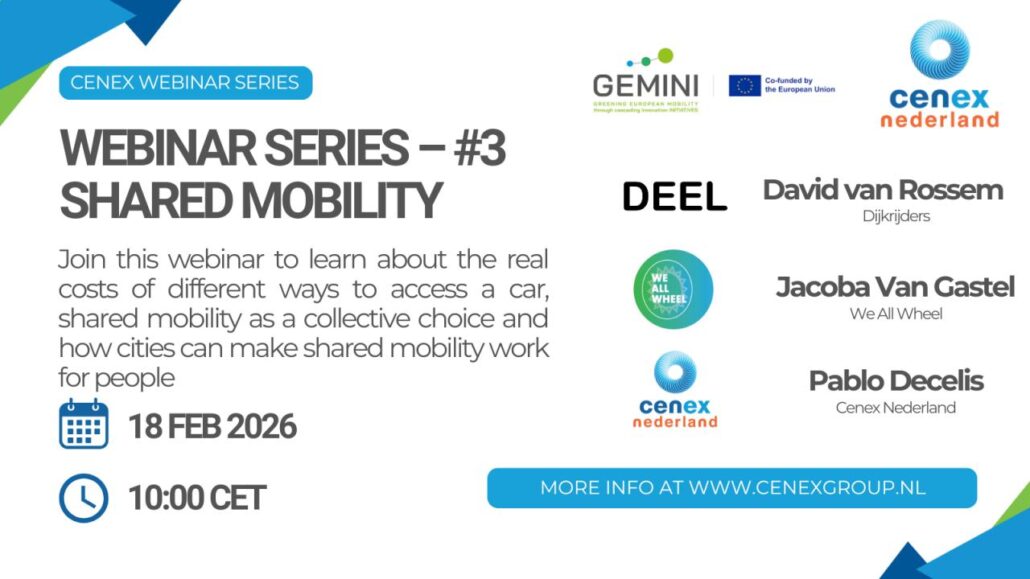
On 18 February, Cenex Nederland is hosting a webinar that starts somewhere else: with the everyday experience of users. The aim is not to promote a particular solution, but to better understand how people actually experience different ways of accessing a car, and what that means for cities trying to support change.
Join the Shared Mobility webinar here
What cost comparisons really do
One part of the webinar looks at the real costs of car access: private ownership, commercial car sharing, and community-based shared cars. Tools such as Cenex’s TOTEC calculator make these costs visible and comparable.
In practice, these comparisons rarely lead directly to change. For many people, they serve a different purpose: confirming that sticking with what they know feels safer. Even when ownership is expensive, it offers predictability. Shared options introduce questions about availability, responsibility, and reliability…that people experience as risk.
Understanding this dynamic matters. It helps explain why transparent numbers alone often have limited impact, and why shared mobility discussions can stall even when the economics are sound.
What users describe when sharing actually works
Community-based car sharing initiatives offer useful insight here. People who participate in them often describe a shift in how they think about mobility over time.
Access to several shared vehicles can feel more flexible than relying on a single privately owned car. Trips become more deliberate. The car is one option among many, rather than the automatic default. For some participants, this also brings financial savings, though that is rarely the only reason they stay involved.
Equally important is the social aspect. Shared mobility in a cooperative setting tends to build familiarity and trust. Participants talk about a stronger sense of connection to their neighbourhood and to the people they share vehicles with. These factors play a significant role in long-term engagement
Mobility as a civic decision
When mobility is organised collectively, choices take on a different meaning. Decisions about how to travel are no longer just about individual convenience; they start to reflect ideas about shared space, responsibility, and the kind of city people want to live in.
This perspective is especially relevant for local authorities. It shifts the focus away from persuading individuals and towards creating conditions that make shared options feel credible and normal.
What cities can influence
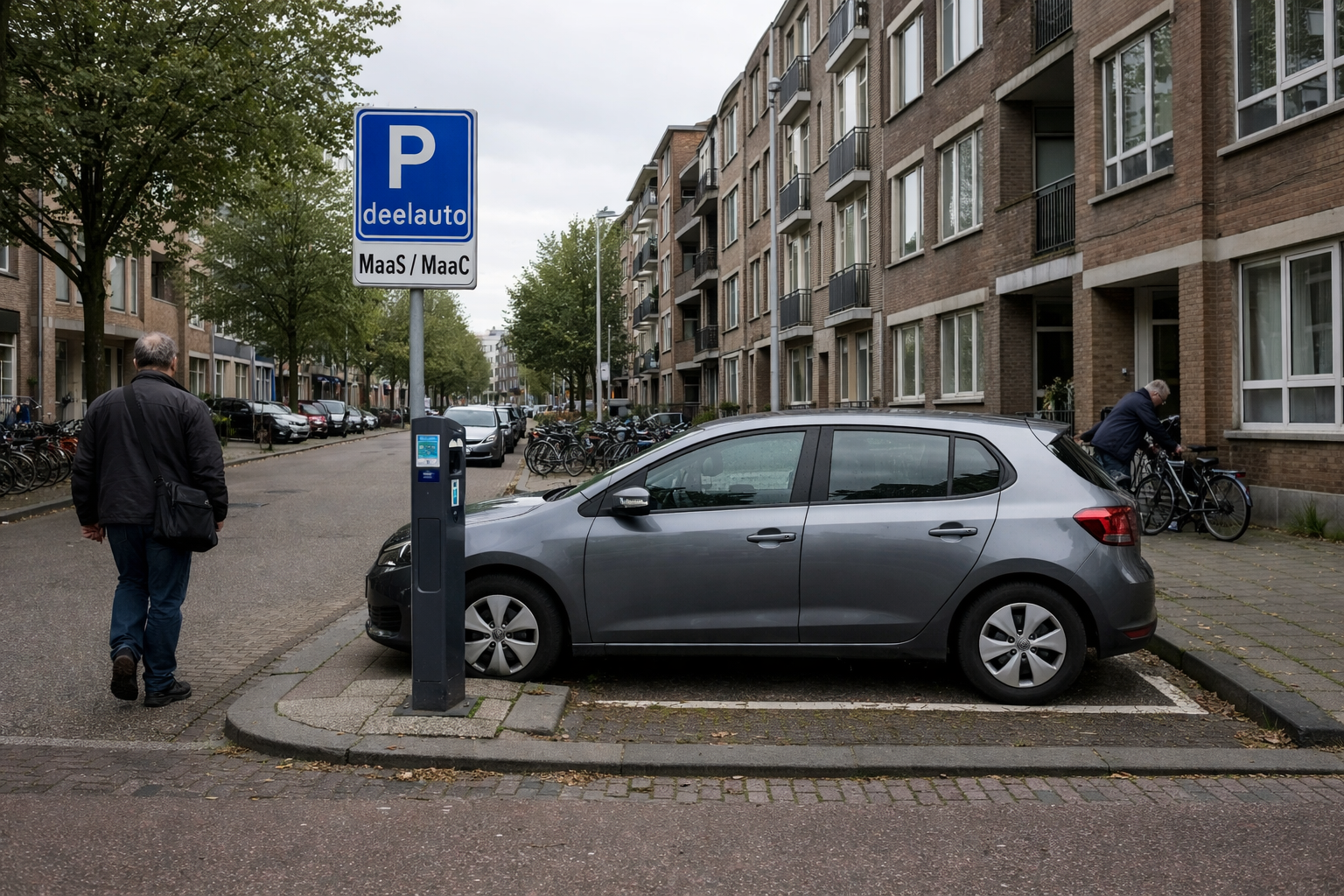
Cities have a strong influence on how risky or safe shared mobility feels in everyday use. Policy frameworks, parking rules, infrastructure design, and procurement choices all shape user confidence.
During the webinar, we want to explore questions such as:
- Which policy choices affect the user experience of shared mobility most directly?
- How can infrastructure make shared options feel dependable rather than provisional?
- What kind of regulatory support helps community-led initiatives without undermining their character?
These are not abstract questions. They affect whether shared mobility remains niche or becomes part of everyday urban life.
Join the webinar
This session is intended for practitioners, policymakers, and organisations working on shared mobility, urban policy, sustainability, or citizen-led initiatives. The goal is to deepen understanding of what drives mobility behaviour and to explore what cities can realistically do to support change.